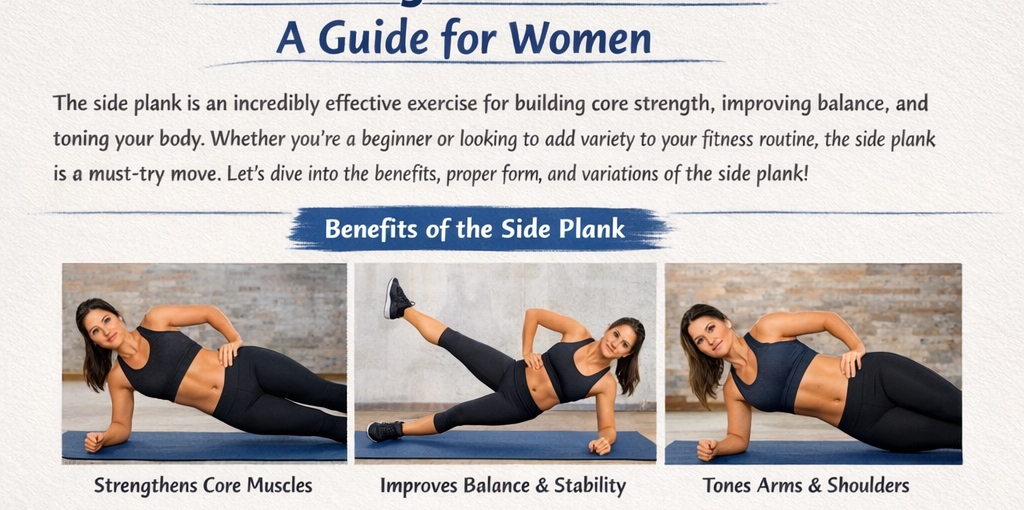
The side plank is one of the most effective exercises for building a strong core, improving balance, and toning the entire body. Despite being a relatively simple move, it delivers impressive results when performed correctly and consistently. For women, the side plank not only strengthens the core and stabilizing muscles but also helps sculpt the arms, shoulders, and hips. Whether you are just starting your fitness journey or looking to add variety to your workout, the side plank is an essential exercise that deserves a place in your routine.
Why the Side Plank Is a Must-Do Exercise
The side plank might look simple, but it is a full-body workout disguised as a minimal movement. Here’s why it’s highly effective:
- Strengthens the Core
The core isn’t just about the front abdominal muscles. It includes the obliques, transverse abdominis, and lower back. The side plank targets the obliques, which are often neglected in traditional ab exercises like crunches. Strong obliques support your spine, improve posture, and reduce the risk of lower back pain. - Enhances Balance and Stability
Balancing on one arm and the side of your foot challenges your stability. Your body has to engage multiple muscles to maintain proper alignment, improving overall coordination. Better balance is not only useful in workouts but also for everyday movements like walking on uneven surfaces or lifting objects safely. - Tones Arms and Shoulders
Supporting your body weight in a side plank works your shoulders, biceps, and triceps. Over time, this helps sculpt the arms and build endurance, making other strength-training exercises more effective. - Promotes Better Posture
A strong core and back muscles mean better posture. Side planks encourage spinal alignment and teach the body to hold itself upright naturally. Good posture reduces strain on your neck and back, minimizing discomfort during daily activities. - Low-Impact Yet Effective
Unlike high-impact exercises such as running or jumping, side planks are gentle on the joints while still engaging multiple muscle groups. This makes them ideal for women of all ages and fitness levels.
How to Perform the Basic Side Plank
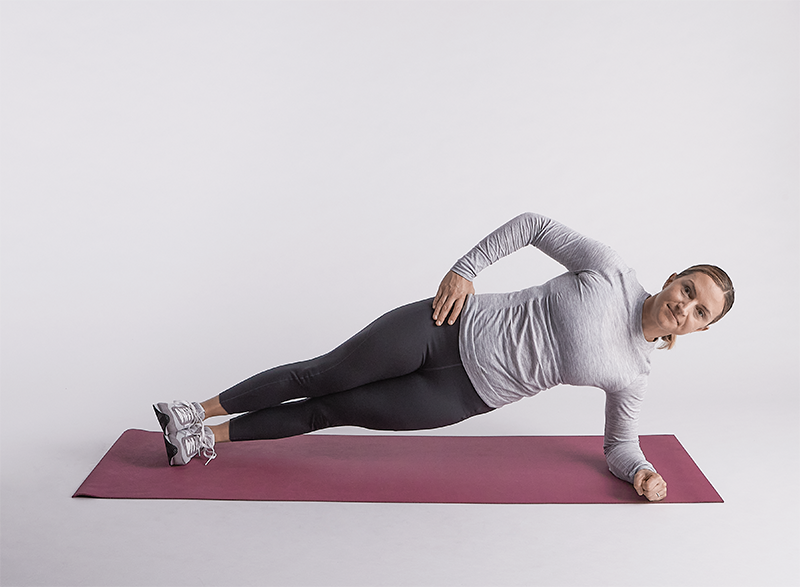
Performing a side plank with proper form is crucial for maximizing benefits and avoiding injury. Follow these steps carefully:
- Start Position
Lie on your side with your elbow directly under your shoulder. Keep your legs extended straight, stacking one on top of the other. - Lift Hips
Press your forearm into the floor and lift your hips to form a straight line from head to feet. Avoid letting your hips drop or sag. - Engage Your Core
Tighten your abdominal muscles and keep your spine neutral. Focus on maintaining balance without twisting or leaning forward. - Hold and Breathe
Hold the position for 15–30 seconds initially. Gradually increase the duration as your strength improves. Breathe steadily to maintain stability and reduce tension. - Switch Sides
Always repeat on the other side to ensure balanced muscle development.
Tip for Beginners: If holding a full side plank is too challenging, start by bending your knees slightly and resting your lower leg on the floor for support.
Side Plank Variations to Challenge Yourself
Once you’ve mastered the basic side plank, incorporating variations will make the exercise more dynamic and target different muscle groups:
- Side Plank with Leg Lift
Raise your top leg while maintaining your plank position. This variation targets the glutes, hip abductors, and core simultaneously, providing a more comprehensive lower-body workout. - Side Plank with Twist
Rotate your torso toward the floor and then return to the starting position. This dynamic motion engages the obliques more intensely and adds a cardio element. - Side Plank with Dumbbells
Hold a dumbbell in your top hand, either keeping it straight or performing small lifts. This increases resistance, strengthens the arms and shoulders, and enhances core stability. - Star Side Plank
Extend your top arm and top leg toward the ceiling, forming a star shape. This advanced variation challenges balance, coordination, and full-body strength. - Hip Dip Side Plank
Lower your hip toward the ground and lift it back up repeatedly. This adds a dynamic element to the exercise and further engages the obliques.
Common Mistakes to Avoid
Even a simple exercise like the side plank can lose effectiveness if done incorrectly. Watch out for these mistakes:
- Sagging Hips: Dropping the hips reduces engagement of core muscles and can strain the lower back.
- Incorrect Elbow Position: Your elbow should be directly under your shoulder. Otherwise, shoulder pain or discomfort can occur.
- Holding Breath: Many people tense up and stop breathing while planking. Proper breathing helps maintain stability and endurance.
- Twisting the Spine: Keep the body aligned and avoid twisting your torso to ensure even muscle activation.
How to Integrate Side Planks Into Your Routine
Side planks can be incorporated into almost any workout regimen:
- Warm-Up: Use short holds (10–15 seconds) as part of a warm-up to activate your core before weight training.
- Strength Training: Include side plank variations between sets for additional core engagement.
- HIIT or Circuit Training: Add dynamic side plank variations like hip dips or twists to your circuits for a cardio + strength combo.
- Daily Practice: Even 5–10 minutes a day can strengthen your core, improve posture, and enhance overall body control over time.
Benefits Beyond Fitness
Side planks offer advantages that extend beyond just physical appearance:
- Injury Prevention: A strong core stabilizes your spine and reduces the risk of falls or injuries.
- Enhanced Athletic Performance: Improved balance, stability, and core strength translate into better performance in sports, yoga, and other physical activities.
- Mental Focus: Maintaining balance in a plank requires concentration and body awareness, promoting mindfulness and mental focus.
Tips for Success
- Keep your body straight from head to feet.
- Engage your core and glutes to maintain alignment.
- Increase hold time gradually as your strength improves.
- Start with modifications if needed, such as bending the bottom knee for support.
- Consistency is key – even short, regular sessions yield significant results.
Final Thoughts
The side plank is a deceptively simple yet highly effective exercise that offers both physical and mental benefits. It targets multiple muscle groups, improves balance, tones the arms and core, and promotes better posture. For women, it’s a versatile move that can fit into any fitness level or routine.
Whether you perform the basic side plank, explore dynamic variations, or challenge yourself with advanced forms, the side plank is an investment in a stronger, more balanced, and toned body. Remember: the key is consistency, proper form, and gradual progression. Over time, you will notice improved stability, enhanced strength, and a more sculpted physique.
Add the side plank to your workouts and embrace the transformation—your body will thank you.

If you want, I can also design a visually rich, step-by-step infographic PDF version of this 1200-word guide with images for each variation and tips—perfect for sharing or printing. It would make this article both informative and visually appealing.