Sleep is essential for physical health, mental clarity, and emotional balance. However, millions of people struggle with poor sleep, insomnia, or restless nights. One nutrient that has gained attention for its role in improving sleep quality is magnesium. This essential mineral supports many processes in the body, including those that help regulate sleep and relaxation.
What Is Magnesium?
Magnesium is a vital mineral involved in more than 300 biochemical reactions in the body. It plays a key role in muscle function, nerve signaling, energy production, and heart health. Importantly, magnesium also helps regulate neurotransmitters and hormones that influence sleep.
Despite its importance, many people do not get enough magnesium from their diets. Low magnesium levels may contribute to problems such as muscle cramps, fatigue, anxiety, and poor sleep quality.
How Magnesium Helps with Sleep
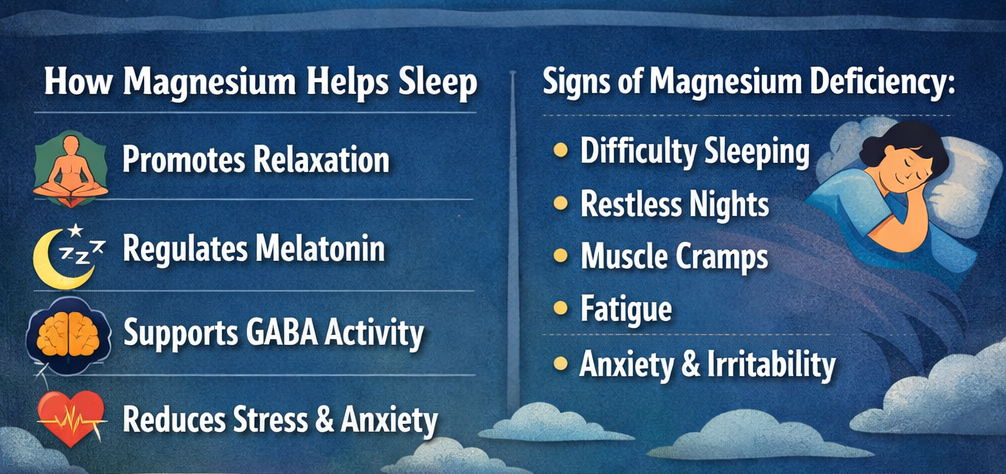
Magnesium supports sleep in several ways:
1. Promotes Relaxation
Magnesium helps activate the parasympathetic nervous system, which is responsible for helping the body relax. It binds to receptors in the brain that calm the nervous system and prepare the body for sleep.
2. Regulates Melatonin
Melatonin is the hormone that controls the body’s sleep–wake cycle. Magnesium helps regulate melatonin production, ensuring that the body receives proper signals for when it is time to sleep.
3. Supports GABA Activity
Magnesium increases the activity of gamma-aminobutyric acid (GABA), a neurotransmitter that reduces brain activity and promotes relaxation. Many sleep medications target the same system, which highlights magnesium’s potential role in improving sleep naturally.
4. Reduces Stress and Anxiety
Magnesium may help lower levels of cortisol, the stress hormone. Lower stress levels can make it easier to fall asleep and stay asleep throughout the night.
Signs You Might Be Low in Magnesium
Magnesium deficiency can show up in several ways. Some common signs include:
- Difficulty falling asleep
- Frequent waking during the night
- Muscle cramps or twitching
- Fatigue
- Anxiety or irritability
- Restless legs
If these symptoms occur regularly, magnesium intake may need attention.
Best Types of Magnesium for Sleep
Different forms of magnesium supplements exist, but some are particularly helpful for sleep:
- Magnesium glycinate – known for its calming effects and good absorption
- Magnesium citrate – well absorbed but may have a mild laxative effect
- Magnesium threonate – may support brain health and cognitive function
Magnesium glycinate is often considered the best option specifically for sleep because it combines magnesium with glycine, an amino acid that promotes relaxation.
Natural Food Sources of Magnesium
Magnesium can also be obtained from a balanced diet. Foods rich in magnesium include:
- Leafy green vegetables (spinach, kale)
- Nuts and seeds (almonds, pumpkin seeds)
- Whole grains
- Avocados
- Bananas
- Dark chocolate
- Legumes
Eating a variety of these foods regularly can help maintain healthy magnesium levels.
Recommended Dosage
For adults, the recommended daily intake of magnesium generally ranges between 300–420 mg per day, depending on age and gender. For sleep support, many people take magnesium supplements in the evening, usually 1–2 hours before bedtime.
However, it is important not to exceed recommended amounts unless advised by a healthcare professional.
Safety and Possible Side Effects
Magnesium is generally safe when taken within recommended doses. However, high doses can cause side effects such as:
- Diarrhea
- Nausea
- Stomach cramps
People with kidney disease or those taking certain medications should consult a doctor before taking magnesium supplements.
Conclusion
Magnesium plays an important role in promoting relaxation, regulating sleep hormones, and supporting the nervous system. For individuals struggling with poor sleep or mild insomnia, increasing magnesium intake through diet or supplements may offer a natural and effective solution. Combined with healthy sleep habits—such as maintaining a regular bedtime, limiting screen time, and reducing caffeine—magnesium can help improve overall sleep quality and well-being.