Table of Contents
- Introduction
- Understanding the Meaning of Classroom 20x
- The Evolution of the Classroom
- Why Education Needs a New Model
- The Core Philosophy Behind Classroom 20x
- Major Characteristics of a Classroom 20x Environment
- Technology as an Enabler, Not the Goal
- Personalized Learning in Classroom 20x
- Student Agency and Ownership
- Collaboration as a Central Learning Practice
- Communication in the Modern Classroom
- The Changing Role of the Teacher
- The Changing Role of the Student
- Real-Time Assessment and Feedback
- Data-Informed Instruction
- Physical Design of a Classroom 20x Space
- The Digital Classroom Beyond the School Building
- Inclusion, Accessibility, and Equity
- Social and Emotional Learning in Classroom 20x
- Project-Based and Inquiry-Based Learning
- Creativity, Critical Thinking, and Problem Solving
- Artificial Intelligence in Classroom 20x
- Benefits of Classroom 20x
- Challenges and Risks
- Misconceptions About Classroom 20x
- Steps for Schools That Want to Implement It
- A Sample Classroom 20x Day
- Classroom 20x Across Different Age Groups
- Classroom 20x in Different Subjects
- Leadership and School Culture
- Parent and Community Involvement
- The Long-Term Impact on Education
- Conclusion
- Frequently Asked Questions
1. Introduction
Education has always reflected the needs of society. When societies needed workers who could follow routines, remember procedures, and perform standardized tasks, classrooms were designed to support those goals. Students sat in rows. Teachers stood at the front. Lessons were delivered to everyone at once. Success often meant listening carefully, memorizing what was taught, and repeating it accurately in tests.
That structure made sense for a long time. It offered order, consistency, and scalability. One teacher could instruct many students at the same time. Schools could operate using clear timetables, common textbooks, and standardized expectations. For decades, this model was seen not only as normal, but as necessary.
But the world students are entering now is very different from the world that shaped traditional schooling. Information is available instantly. Workplaces demand adaptability. Technology influences nearly every profession. Communication happens across cultures and continents. Creativity, collaboration, digital literacy, and critical thinking matter more than ever. Students are no longer preparing only for predictable careers or fixed paths. They are preparing for a future that changes quickly and often unexpectedly.
This shift has created a serious question for educators: can a classroom model built for an earlier era still fully serve today’s learners?
That question is where the idea of Classroom 20x becomes powerful.
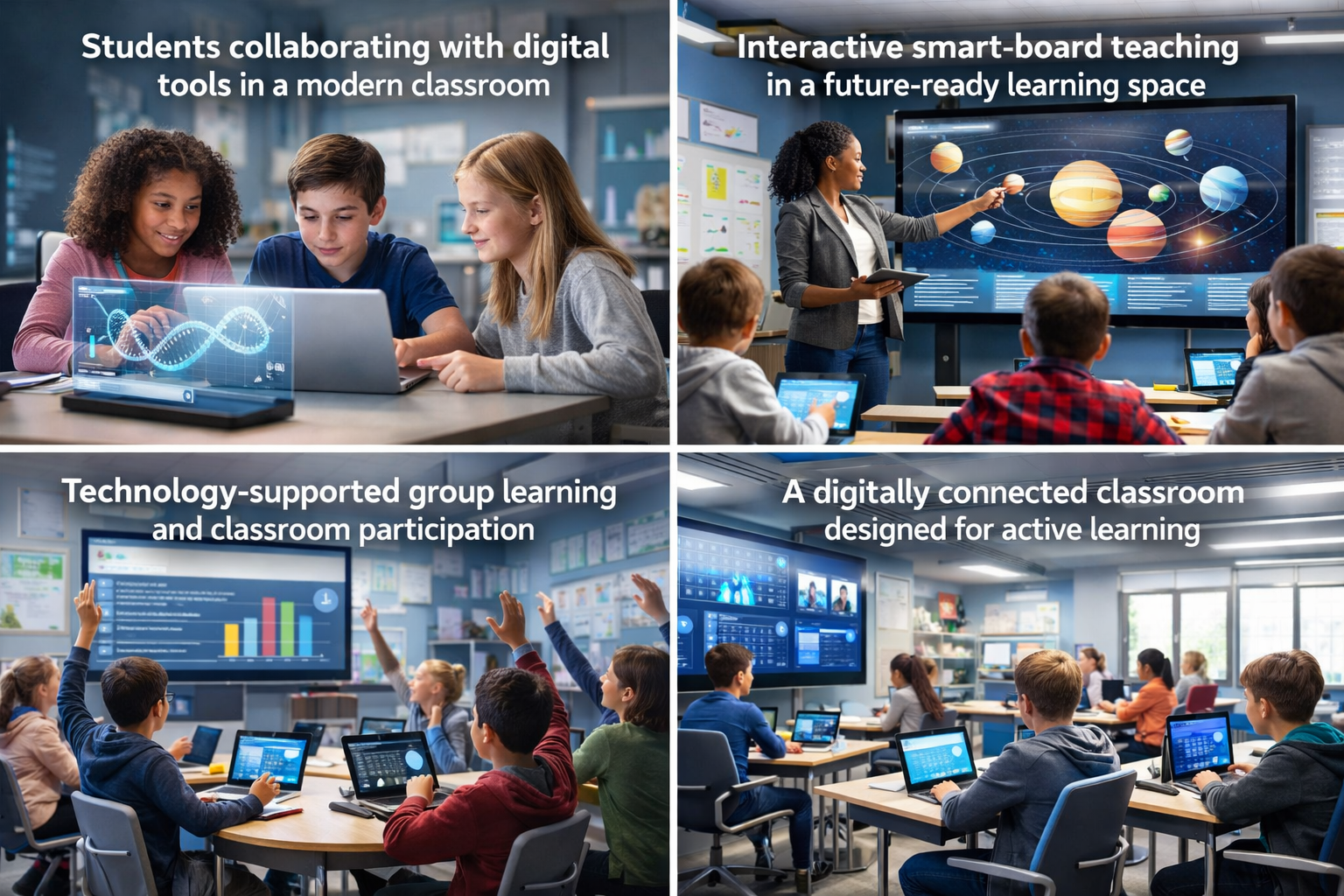
Classroom 20x is not simply a trendy phrase for putting laptops on desks or installing a projector in every room. It represents a broader rethinking of how classrooms should function in a modern world. It is about multiplying the effectiveness of teaching and learning by combining purposeful technology, student-centered design, flexible pedagogy, continuous feedback, collaboration, and inclusion. It imagines the classroom not as a static place where information is delivered, but as a dynamic environment where learning is actively constructed.
In this model, the classroom becomes more responsive. Students are given more voice and more ways to engage. Teachers use better tools to understand student needs in real time. Learning can happen both inside and outside the classroom. Instruction can be personalized without losing academic focus. Assessment becomes something that guides learning instead of merely judging it at the end. Technology serves the learning process instead of dominating it.
The phrase “Classroom 20x” suggests amplification. It points to a classroom experience that is not just slightly improved, but dramatically more powerful than conventional models in terms of engagement, flexibility, relevance, and effectiveness. Whether used as a concept, a framework, or a vision, it invites educators to ask a bigger question: what would a classroom look like if it were truly designed for the learners of today and the realities of tomorrow?
This article explores that question in depth. It examines what Classroom 20x means, why it matters, how it works, what challenges it faces, and how schools can move toward it in practical ways. It also looks at how this model affects teachers, students, school leaders, and communities. Most importantly, it argues that the future classroom should not simply be more digital. It should be more human, more flexible, more thoughtful, and more capable of helping every learner succeed.
2. Understanding the Meaning of Classroom 20x
The term Classroom 20x is best understood as a future-oriented approach to education that reimagines the classroom as interactive, adaptable, connected, and learner-centered. It does not refer to one single official system used everywhere. Instead, it works as a broad concept that combines several modern educational ideas into one vision.
At its heart, Classroom 20x represents an upgrade in how teaching and learning happen. The “20x” suggests dramatic improvement, multiplication, or transformation. The classroom is no longer treated as a place where one teacher speaks and many students receive the same material in the same way. Instead, it becomes a flexible ecosystem designed to meet different student needs while still moving toward shared goals.
A Classroom 20x setting often includes the following features:
- purposeful use of digital tools
- personalized learning pathways
- flexible physical arrangements
- strong collaboration
- active student participation
- continuous assessment and feedback
- teacher guidance supported by data
- learning that extends beyond classroom walls
What makes Classroom 20x different from older models is not just the presence of devices or software. Plenty of classrooms have technology without being transformational. A room full of students passively copying slides from a smartboard is still a traditional classroom with upgraded equipment. Classroom 20x demands a deeper shift. It changes relationships, roles, expectations, and instructional design.
This means the teacher is no longer only a lecturer. The student is no longer only a listener. Content is no longer limited to the textbook. Time is no longer used only in whole-class explanation. Assessment is no longer only a final exam. Space is no longer arranged for a single mode of learning. The classroom becomes a place of exploration, creation, discussion, feedback, and reflection.
Another important point is that Classroom 20x is not anti-teacher, anti-discipline, or anti-knowledge. It does not reject structure. It does not suggest that students should simply do whatever they want. It is not a chaotic free-for-all disguised as innovation. In fact, it often requires more thoughtful planning, stronger routines, and clearer learning goals than traditional instruction. The difference is that those structures are built to support active learning rather than passive compliance.
So when people talk about Classroom 20x, they are really talking about a classroom model that multiplies the possibilities of education. It uses modern tools and methods to make learning more relevant, accessible, responsive, and meaningful. It aims to prepare students not just to pass tests, but to thrive in a changing world.
3. The Evolution of the Classroom
To understand Classroom 20x, it helps to understand how classrooms evolved in the first place.
Early formal education often depended on direct instruction, memorization, and recitation. In many school systems, efficiency was a major priority. One adult needed to manage many learners. Uniform lessons made administration easier. Desks in rows allowed control. Bells, schedules, and subject periods created order. Textbooks standardized content. Exams measured retention.
This structure mirrored industrial society. Factories valued punctuality, repetition, and consistency. Schools developed similar habits. Students learned to follow instructions, complete set tasks, and work within fixed systems. For a long time, this seemed not only practical but successful.
Then several shifts began to challenge that model.
The first was the growth of educational psychology. Researchers and teachers began to study how children actually learn, not just how schools could be organized efficiently. Ideas about developmental stages, motivation, active learning, and individual differences started influencing classroom practice.
The second was the expansion of mass media and digital technology. Learning was no longer confined to teacher talk and printed pages. Audio, video, the internet, and interactive platforms gave students access to knowledge in entirely new ways.
The third was economic change. Modern work increasingly rewards skills such as communication, problem solving, creativity, and adaptation. These are not skills that flourish best in purely passive environments.
The fourth was social change. Schools became more diverse. More attention was paid to disability access, language support, emotional well-being, and inclusive design. A standardized approach often left too many learners behind.
The fifth was the experience of remote and hybrid education, which pushed schools to develop digital infrastructure quickly. Whether schools were ready or not, many educators had to learn how to organize instruction online, communicate through digital platforms, and rethink how learning could continue beyond a physical room.
Each of these changes chipped away at the idea that a single fixed classroom model should dominate all learning. The result is the current moment: a period in which educators are actively redesigning what a classroom can be.
Classroom 20x sits inside that history. It is not an abrupt break from the past. It is the next stage in a long evolution. It keeps what still works from earlier models, such as clarity, high expectations, teacher expertise, and purposeful curriculum. But it rejects the idea that all students must learn in identical ways or that learning is best measured only by delayed high-stakes testing.
In that sense, Classroom 20x is both modern and logical. It is what happens when education adapts to better understand learners, better tools, and a more complex world.
4. Why Education Needs a New Model
The need for a new classroom model is not just about trends. It comes from a mismatch between what many schools still do and what students now need.
One major problem is that traditional classrooms often assume uniformity where real diversity exists. Students differ in background knowledge, pace, language ability, confidence, attention, interests, and support needs. Teaching the same lesson in the same way to every student can be tidy from an administrative point of view, but it is often weak from a learning point of view.
Another issue is the nature of modern knowledge. Students no longer depend on school as their only access point to information. Facts can be searched in seconds. That does not make knowledge unimportant. It means education must go beyond information delivery. Students need to evaluate sources, interpret ideas, synthesize information, solve problems, and apply learning in context.
Motivation is another reason change is needed. Many students feel disconnected from classroom routines that emphasize completion over curiosity. When learning feels rigid, repetitive, or irrelevant, engagement drops. Students may comply outwardly while mentally checking out. A better model must make learning more participatory and meaningful.
There is also the issue of future readiness. Employers and universities increasingly expect learners to manage projects, communicate clearly, collaborate with others, use digital tools responsibly, and adapt to unfamiliar challenges. These capacities are hard to build in classrooms centered only on silent reception and end-of-unit testing.
Equity makes the case even stronger. A one-size-fits-all classroom often advantages students who already fit its assumptions: students who process information quickly, respond well to lecture, read at the expected level, and feel comfortable in conventional academic settings. Other students may be equally capable but need different routes into the learning. Classroom 20x seeks to widen those routes.
The world outside school has also changed its rhythm. Communication is faster. Technology is embedded in daily life. Students are used to interactivity, immediacy, and multimedia input. Schools do not need to imitate entertainment, but they do need to recognize that attention and engagement now operate in a different context.
Finally, resilience matters. Education systems need to be able to continue under changing conditions. A classroom model that includes digital access, flexible communication, and blended learning structures is simply more adaptable than one that depends entirely on the teacher and students being physically present in the same way at the same time.
Education needs a new model because the old one, while once effective for its purpose, no longer fully matches the complexity of student needs or the demands of the modern world. Classroom 20x answers that need by offering a design that is more flexible, inclusive, and responsive without sacrificing rigor.
5. The Core Philosophy Behind Classroom 20x
Every serious educational model rests on a philosophy, even if people do not always state it clearly. Classroom 20x is built on several foundational beliefs about learning, teaching, and human potential.
The first belief is that students learn best when they are active participants rather than passive recipients. This does not mean students must always be moving, talking, or doing elaborate projects. It means learning becomes stronger when students think, question, apply, create, explain, and reflect.
The second belief is that learners are different, and good teaching should respond to those differences. A modern classroom should not force every student through one narrow route. Instead, it should offer multiple ways to access content, engage with ideas, and demonstrate understanding.
The third belief is that feedback matters most when it is timely. Waiting until the end of a learning cycle to find out what students did not understand is inefficient and discouraging. Classroom 20x values ongoing checks for understanding and real-time adjustments.
The fourth belief is that relationships still sit at the center of education. Technology can support learning, but it cannot replace trust, encouragement, classroom culture, or the emotional intelligence of a skilled teacher. Classroom 20x is not built around gadgets. It is built around better human learning supported by better tools.
The fifth belief is that school should prepare students for life, not only for exams. That means developing habits of inquiry, resilience, communication, and ethical judgment alongside academic knowledge.
The sixth belief is that learning is not confined to a place. A classroom can extend into homes, communities, digital spaces, and collaborative networks. Time and space become more flexible in this model.
The seventh belief is that improvement comes from reflection and adaptation. Teachers refine lessons. Students monitor their progress. Schools review systems. Classroom 20x is not static. It is a culture of continuous learning.
Taken together, these beliefs create a philosophy that is both ambitious and practical. Classroom 20x is not about novelty for its own sake. It is about designing classrooms around how learning actually works and what learners actually need.
6. Major Characteristics of a Classroom 20x Environment
A Classroom 20x environment has several defining characteristics that separate it from a conventional classroom. These features work together rather than in isolation.
Learner-Centered Design
Learning experiences are planned with student needs, participation, and growth in mind. The focus shifts from “How do I cover this content?” to “How do students best learn this content?”
Flexible Instruction
Not every lesson follows the same pattern. Teachers may use mini-lessons, stations, conferences, collaborative tasks, independent modules, or blended approaches depending on the goal.
Multiple Learning Pathways
Students can engage with material in different ways. One might watch a video explanation, another might read a text, another might join a guided group, and another might learn through a simulation.
Continuous Feedback
The classroom includes regular checks for understanding. Teachers and students use feedback to make decisions immediately rather than waiting until the unit ends.
Strong Use of Collaboration
Students learn with and from one another through discussion, peer review, group tasks, and co-created products.
Digital Integration
Technology is woven into the classroom in meaningful ways. It supports organization, communication, assessment, research, creation, and personalization.
Visible Learning Goals
Students know what they are learning, why they are learning it, and what success looks like. Clarity increases independence.
Data-Informed Decisions
Teachers use evidence from student work, participation, and assessments to decide what to reteach, extend, or modify.
Inclusion and Accessibility
The environment is designed so more students can access learning effectively. Supports are built in, not added only after problems appear.
Future-Relevant Skills
Students practice collaboration, communication, digital literacy, problem solving, and self-management alongside subject knowledge.
A classroom does not become “20x” because it has one or two of these features occasionally. The model becomes meaningful when these elements shape the daily learning culture.
7. Technology as an Enabler, Not the Goal

One of the biggest mistakes schools make is confusing educational technology with educational transformation. Buying devices is easy compared with changing instruction. It is entirely possible to spend a lot of money on technology and still leave learning untouched.
Classroom 20x avoids that trap by treating technology as an enabler. In other words, technology matters because of what it allows learners and teachers to do better.
Technology can help students access diverse materials quickly. It can give them multimedia explanations, interactive simulations, and updated resources. It can help teachers organize assignments, communicate clearly, and track progress efficiently. It can allow students to collaborate in shared digital spaces. It can support accessibility features like captions, speech tools, and adjustable display settings. It can make formative assessment faster and more visible.
But technology should not become the center of attention. A lesson is not automatically strong because students use tablets. A classroom is not automatically modern because it has a smartboard. The key question is always this: does the technology deepen learning?
In Classroom 20x, technology serves clear purposes:
- improving access to content
- increasing student participation
- supporting personalization
- making feedback faster
- strengthening collaboration
- reducing unnecessary admin work
- extending learning beyond the room
Teachers still make the essential decisions. They decide when technology adds value and when a simple discussion, handwritten draft, or face-to-face explanation is better. They decide how to manage screen time, protect focus, and keep the human dimension of learning alive.
A healthy Classroom 20x environment is not obsessed with digital novelty. It is selective. It uses tools intentionally. It chooses what supports learning best, whether that is an online quiz, a whiteboard discussion, a paper sketch, a peer conversation, or a teacher conference.
That is the real distinction. Technology in Classroom 20x is a means, not an identity.
8. Personalized Learning in Classroom 20x
Personalized learning is one of the most important features of Classroom 20x because it responds directly to a basic truth: students do not all learn in the same way or at the same pace.
In a traditional classroom, personalization is often limited because one teacher must manage many learners at once. Lessons are usually designed for the “middle” of the class. Students who struggle may fall behind, while those who move quickly may become bored. Teachers try to differentiate, but the structure itself often works against them.
Classroom 20x uses better systems and tools to make personalization more practical. This does not mean every student follows a completely different curriculum. It means teachers can offer multiple pathways, levels of support, and formats of engagement while still guiding all students toward common objectives.
Personalized learning can include:
- adaptive practice tools that change difficulty
- flexible grouping based on need
- teacher conferences for targeted feedback
- choice in how students demonstrate understanding
- self-paced modules for certain tasks
- scaffolds for students who need extra support
- enrichment tasks for advanced learners
- varied formats such as text, video, audio, and visuals
Personalization also supports motivation. Students are more likely to engage when tasks feel appropriately challenging instead of impossible or repetitive. They are also more likely to take ownership when they have some choice and when the learning feels responsive to their progress.
However, real personalization is not just a software feature. It depends on teacher insight. Teachers observe students, analyze work, build relationships, and understand who needs confidence, who needs challenge, who needs structure, and who needs flexibility. Technology can help deliver personalized content, but teachers make personalization meaningful.
The goal is not to isolate students into separate bubbles. Shared class identity still matters. Collective discussion still matters. Common learning goals still matter. Personalized learning in Classroom 20x is about responsiveness within community, not fragmentation.
When done well, it tells every student something powerful: your learning matters enough for the classroom to adapt.
9. Student Agency and Ownership
One of the defining shifts in Classroom 20x is the move from student compliance to student agency.
Compliance means students do tasks because they are told to. Agency means students understand the learning, participate actively in it, make meaningful choices, and see themselves as responsible for growth. Ownership develops when students stop seeing school as something done to them and begin seeing it as something they are part of.
In Classroom 20x, student agency can appear in many forms. Students may choose from different project formats. They may set goals and track progress. They may reflect on feedback and revise work. They may help shape discussion questions, conduct research, or design solutions to authentic problems. They may collaborate with peers and decide how to divide responsibilities.
Agency matters because passive learners rarely become independent thinkers. When students are trusted with responsibility, they often rise to it. They learn how to plan, monitor, persist, and improve. Those are life skills, not just school skills.
Of course, agency does not mean unlimited freedom. Structure still matters. Teachers still define learning goals and maintain standards. The best student ownership happens inside a well-designed framework. Too little structure creates confusion. Too much control creates dependence. Classroom 20x aims for the balance: guided independence.
Another important piece of agency is metacognition, or learning how to think about one’s own thinking. Students in a 20x environment are encouraged to ask themselves:
- What am I trying to learn?
- What strategy am I using?
- What am I finding difficult?
- What feedback have I received?
- What should I do next?
These questions help students become more self-aware learners. Instead of waiting passively for grades, they learn how to monitor their own progress.
Over time, agency changes classroom culture. Students become contributors rather than just attendees. That shift can be a game changer.
10. Collaboration as a Central Learning Practice
Collaboration is not an extra feature in Classroom 20x. It is one of the main engines of learning.
Humans learn socially. We test ideas through conversation. We refine understanding when we explain it to others. We discover gaps in our thinking when someone asks a question we had not considered. Collaboration gives students access not just to content, but to collective intelligence.
Traditional classrooms often treat collaboration as occasional. Students may do group work at the end of a unit or for a special activity, but much of learning remains individual and teacher-led. Classroom 20x makes collaboration more consistent and purposeful.
This can take many forms:
- think-pair-share conversations
- peer feedback cycles
- shared digital documents
- collaborative problem solving
- debates and discussions
- project teams
- group research
- co-created presentations
- student teaching and explanation
Collaboration develops academic understanding, but it also builds social skills. Students learn to listen, negotiate, divide tasks, explain clearly, manage disagreement, and hold one another accountable. These are essential abilities for life beyond school.
Still, collaboration must be taught well. Putting students in groups does not automatically produce good learning. Some students dominate. Some disappear into the background. Some groups divide the work in ways that avoid real thinking. Teachers in Classroom 20x therefore design collaboration carefully. They assign roles when useful, create clear goals, teach discussion norms, and monitor group processes.
Technology can expand collaboration too. Students can work together in real time on documents, slides, shared notes, and digital whiteboards. They can comment on each other’s drafts. They can connect beyond the classroom to experts, audiences, or partner classes.
A strong Classroom 20x environment sends the message that learning is not only personal. It is also communal. Students do not just grow alone. They grow together.
11. Communication in the Modern Classroom
Good classrooms run on communication. Without it, even strong lessons fall apart.
In traditional settings, communication often depends on verbal instructions given once in class. Students miss details, forget deadlines, or misunderstand tasks. Teachers repeat themselves endlessly. Families may have limited visibility into what students are doing.
Classroom 20x improves this by making communication clearer, more consistent, and more multi-directional.
Teachers communicate learning goals, instructions, due dates, feedback, and resources through organized platforms and visible systems. Students can revisit those materials instead of relying only on memory. This reduces confusion and supports independence.
Students also communicate more actively. They ask questions, participate in discussion spaces, share drafts, explain reasoning, and give peer feedback. Communication becomes part of the learning process rather than just a logistical necessity.
Another important shift is that communication is no longer confined to school hours or physical presence. Students can access announcements, resources, and collaborative tools outside the classroom. This continuity helps keep learning connected.
Families can benefit too when schools create clear channels for updates and visibility. Parents and guardians are better able to support students when they understand expectations and progress.
Communication in Classroom 20x is not only about efficiency. It is also about classroom culture. Clear communication builds trust. It reduces anxiety. It helps students feel oriented. It makes the classroom feel like a shared learning community instead of a place where instructions disappear into the air.
12. The Changing Role of the Teacher
The teacher’s role in Classroom 20x becomes more complex, more strategic, and more important.
There is a lazy myth that future-focused classrooms reduce the importance of teachers because students can access information online. In reality, the opposite is true. When information is abundant, students need skilled teachers even more. They need adults who can help them interpret ideas, connect concepts, ask better questions, think critically, and learn responsibly.
In a Classroom 20x environment, the teacher acts as:
- designer of learning experiences
- facilitator of inquiry and discussion
- provider of targeted instruction
- coach and mentor
- assessor of progress
- builder of classroom culture
- interpreter of data
- protector of inclusion and equity
- model of curiosity and thinking
Instead of spending all class time delivering content to the whole group, teachers can use time more flexibly. They may give a short direct explanation, then move into guided groups, independent tasks, or collaborative work. They may conference with students individually while others work on structured activities. They may use data from quick assessments to decide who needs reteaching and who is ready for extension.
This is not less demanding than traditional teaching. Honestly, it is often more demanding. It requires stronger planning, sharper observation, and better classroom management. Teachers need professional support to do it well.
But it can also be more satisfying. Instead of acting like a broadcaster trying to keep everyone on the same page, the teacher becomes an active guide who can respond to actual student needs. More time goes into interaction, feedback, and learning design. Less time is wasted on repetitive admin tasks that technology can streamline.
A great Classroom 20x teacher is not replaced by the system. They are amplified by it.
13. The Changing Role of the Student
As the teacher’s role changes, so does the student’s.
In many conventional classrooms, the student role is fairly narrow. Listen. Take notes. Complete work. Study for the test. Wait for the teacher to evaluate it. This can produce order, but it often produces dependence too. Students may become good at following instructions without becoming strong at directing their own learning.
In Classroom 20x, students are expected to do more than receive. They are expected to engage, think, create, reflect, collaborate, revise, and take responsibility.
The Classroom 20x student becomes:
- an active learner
- a participant in discussion
- a collaborator with peers
- a self-monitor of progress
- a user of feedback
- a creator of products and ideas
- a problem solver
- a digital citizen
- a reflective thinker
This role is more demanding, but also more empowering. Students are not treated as empty containers waiting to be filled. They are treated as developing thinkers who can contribute to the learning environment.
This shift can take time. Some students are used to being told exactly what to do. They may initially resist open-ended tasks or reflective routines. They may mistake freedom for lack of structure. That is why Classroom 20x requires teachers to explicitly teach independence, self-management, collaboration, and digital responsibility.
When students grow into this role, the effects are significant. They become more confident. They develop a stronger sense of capability. They learn that effort, strategy, and revision matter. They begin to see school as a place where their thinking has value.
That is a big upgrade from simply trying to survive the timetable.
14. Real-Time Assessment and Feedback
One of the strongest practical advantages of Classroom 20x is the ability to assess learning continuously and respond quickly.
In many older models, assessment is delayed. Teachers teach a unit, give a test, grade it later, and then move on. By the time feedback arrives, the moment for improvement may already have passed. Students may barely remember the task. Teachers may have too little time to revisit misunderstandings.
Classroom 20x shortens that feedback loop.
Teachers use quick checks for understanding throughout lessons and units. These might include digital quizzes, polls, exit tickets, mini-whiteboard responses, peer discussion summaries, draft reviews, or short reflections. The goal is to gather useful evidence while learning is still in progress.
This creates several benefits.
First, teachers can spot misconceptions early. Instead of discovering at the end that half the class did not understand a concept, they can identify the issue immediately and adjust instruction.
Second, students get clarity faster. They do not have to wait nervously to find out whether they are on the right track. They can improve while the learning is still active.
Third, assessment becomes less frightening. When feedback is frequent and formative, students begin to see mistakes as part of growth rather than as final judgments.
Fourth, teachers can make smarter grouping decisions. Students who need support can get it sooner. Students who are ready to move ahead can do so without unnecessary delay.
In Classroom 20x, feedback should be timely, specific, and actionable. “Incorrect” is weak feedback. “You identified the main idea, but your evidence does not yet explain why it matters” is stronger because it points the student toward improvement.
Real-time assessment turns the classroom into a responsive system. Teaching is not locked in after the lesson plan is written. It can evolve moment by moment based on what students actually show.
15. Data-Informed Instruction
Data can sound cold or mechanical, but in Classroom 20x it is really about better awareness.
Every classroom generates information. Student answers, participation patterns, assignment completion, quiz results, writing samples, and observations all reveal something about learning. The problem in traditional systems is that much of this information is hard to gather quickly or use effectively. Teachers may know generally how a class is doing, but lack clear snapshots of who needs what.
Classroom 20x uses data more actively. Teachers can review patterns from formative assessments, digital submissions, participation tools, and performance dashboards. This helps them make instructional decisions based on evidence rather than guesswork.
Data-informed teaching can answer questions like:
- Which concept confused most of the class?
- Which students need reteaching?
- Which students are ready for extension?
- Are there gaps between participation and understanding?
- Which tasks seem to increase engagement?
- Where do students repeatedly struggle in a unit?
This does not mean teaching becomes robotic. Data should inform professional judgment, not replace it. Numbers and dashboards cannot fully capture emotion, effort, context, or classroom relationships. Teachers still need observation and conversation. But data can sharpen those insights.
Used well, data makes teaching more precise. Instead of saying “the class seems weak on fractions,” a teacher might discover that students specifically struggle with comparing unlike denominators but do better when using visual models. That level of clarity supports better instruction.
Students can use data too. When learners track goals, monitor progress, and reflect on performance, they become more self-aware and motivated.
In Classroom 20x, data is not about surveillance. It is about support. It helps teachers and students see learning more clearly.
16. Physical Design of a Classroom 20x Space
The physical classroom matters more than people sometimes admit. Space shapes behavior. A room arranged for silence and one-way attention sends a different message from a room arranged for discussion, collaboration, and movement.
Classroom 20x rethinks physical design so it supports multiple modes of learning instead of just one.
This might include:
- movable desks or tables for quick regrouping
- spaces for small-group discussion
- areas for independent quiet work
- presentation zones
- writing surfaces students can use actively
- device-friendly layouts with charging access
- clear visual displays of goals and resources
- spaces that reduce clutter and increase focus
The aim is flexibility. A teacher may want students in direct-instruction mode for ten minutes, then in pairs, then in project groups, then in independent reflection. A rigid room slows all of that down. A flexible room makes transitions easier and learning more dynamic.
Design also affects inclusion. Students with different sensory needs, mobility needs, or attention profiles benefit from classrooms that allow more than one way to be present and productive.
That said, Classroom 20x does not require expensive architecture to begin. Many teachers can move toward this model by rearranging furniture, creating clearer zones, improving visibility, and designing routines that let the room serve learning more effectively.
The room itself teaches students what kind of classroom this is. If it says “sit still and receive,” that shapes behavior. If it says “learn actively, think together, and use this space with purpose,” that shapes behavior too.
17. The Digital Classroom Beyond the School Building
One of the biggest changes in modern education is that the classroom no longer ends at the door.
In Classroom 20x, digital spaces extend learning beyond the physical room. Students can access materials, instructions, deadlines, feedback, and collaborative tools from other locations. This creates continuity. Learning is no longer limited to the few hours students spend physically present in class.
This does not mean students should be online all the time. It means the learning environment has a digital layer that supports access and connection.
That digital layer may include:
- a central platform for assignments and announcements
- digital resource libraries
- recorded mini-lessons
- discussion spaces
- shared documents for collaboration
- online assessment tools
- digital portfolios
- communication channels for clarification and support
There are major advantages here. Students who miss class can catch up more easily. Students who need to revisit explanations can do so. Families can better understand expectations. Group work can continue beyond school hours. Teachers can organize materials more efficiently.
The digital classroom also supports resilience. If schedules change or access becomes disrupted, learning can continue more smoothly when systems are already in place.
Still, this model depends on equity. A digital classroom is only fair if students actually have the access needed to use it. Schools must think carefully about devices, internet access, offline options, and realistic workload expectations.
When designed well, the digital classroom is not an extra burden. It is a support structure that keeps learning organized, visible, and reachable.
18. Inclusion, Accessibility, and Equity
A classroom cannot truly be modern if it works well only for students who already fit its assumptions. That is why inclusion, accessibility, and equity are central to Classroom 20x.
Inclusion means students of different abilities, languages, backgrounds, and needs are meaningfully part of the learning environment. Accessibility means the classroom removes barriers wherever possible. Equity means students get the support and opportunities they need, not merely identical treatment.
Classroom 20x can improve inclusion in several ways.
Digital tools can offer text-to-speech, speech-to-text, captions, translation supports, adjustable fonts, and multimedia formats. Students who struggle with one mode of access may thrive with another. Flexible pacing can help students who need more processing time. Varied task formats can let students show understanding in ways that better reflect their strengths.
But inclusion is not only about tools. It is also about pedagogy and culture. Teachers must design learning so different students can participate with dignity. They must choose examples that reflect diverse lives. They must create a climate where students feel safe to contribute. They must avoid building a classroom around narrow ideas of what a “good student” looks like.
Equity also requires attention to material realities. Some students may not have a reliable device, quiet study space, strong internet connection, or outside academic support. A Classroom 20x model must account for that. Otherwise, digital innovation can accidentally widen inequality instead of reducing it.
An inclusive Classroom 20x environment asks not, “Can all students survive this system?” but, “How can this system be built so more students can genuinely thrive?”
That question changes everything.
19. Social and Emotional Learning in Classroom 20x
Academic learning does not happen in an emotional vacuum. Students bring stress, confidence, fear, curiosity, relationships, and self-beliefs into the classroom every day. A model that ignores those realities will struggle, no matter how advanced the technology is.
Classroom 20x recognizes that social and emotional learning is not separate from academic success. It is woven into it.
Students learn better when they feel safe, respected, and capable. They participate more when they trust the classroom environment. They persist more when they believe mistakes are part of learning rather than proof of failure.
Social and emotional learning in Classroom 20x includes:
- self-awareness about strengths and challenges
- self-management and organization
- empathy and respectful listening
- responsible decision making
- conflict resolution in collaborative settings
- resilience and recovery after setbacks
- reflection on growth
These skills become especially important in a classroom that gives students more agency and collaboration. Independence without self-management becomes chaos. Group work without empathy becomes frustration. Feedback without emotional safety becomes discouraging. That is why social and emotional development must be taught alongside academic content.
Teachers play a huge role here. Their responses to mistakes, tone of feedback, expectations for discussion, and willingness to build relationships all shape the emotional climate of the room.
A truly powerful Classroom 20x environment does not just produce smarter students. It helps produce steadier, more reflective, more confident learners.
20. Project-Based and Inquiry-Based Learning
Classroom 20x often works beautifully with project-based and inquiry-based learning because both approaches emphasize active engagement, deep thinking, and real-world application.
Project-based learning invites students to investigate a meaningful question or challenge over time and create a product, presentation, or solution. Inquiry-based learning encourages students to explore questions, gather evidence, test ideas, and construct understanding rather than simply receiving answers.
These approaches fit Classroom 20x because they:
- require collaboration
- support student ownership
- connect learning to authentic problems
- allow multiple forms of expression
- develop critical thinking
- encourage sustained engagement
For example, instead of only reading about environmental issues, students might investigate local waste patterns, analyze data, interview community members, and propose a school recycling initiative. Instead of only memorizing historical dates, students might examine competing sources and build an evidence-based interpretation of an event.
Technology can strengthen these approaches by supporting research, collaboration, multimedia creation, expert access, and project management. But the heart of the work remains intellectual. Students learn by doing the thinking.
Good project and inquiry learning still requires structure. Teachers define standards, help students manage time, teach research methods, guide reflection, and ensure that projects remain academically rigorous rather than decorative.
In Classroom 20x, projects are not just a fun extra. They are one of the best ways to turn learning into something students can own and apply.
21. Creativity, Critical Thinking, and Problem Solving
If traditional education often prioritized recall, Classroom 20x puts much more emphasis on what students can do with knowledge.
Creativity, critical thinking, and problem solving are not optional add-ons. They are essential outcomes. Students need to generate ideas, evaluate evidence, examine assumptions, and work through uncertainty. Those skills matter in school, work, and civic life.
Creativity in Classroom 20x does not only mean art or design, though those matter too. It includes creative thinking across subjects: writing an original interpretation, designing an experiment, finding multiple solution paths in mathematics, building a compelling presentation, or imagining a better way to address a problem.
Critical thinking means asking questions like:
- What evidence supports this claim?
- What might be missing here?
- Is this source reliable?
- What assumptions are being made?
- Are there other explanations?
Problem solving means applying knowledge to situations where the answer is not obvious. It requires persistence, flexibility, and reasoning.
A Classroom 20x environment encourages these habits by using open-ended tasks, discussion, inquiry, reflection, and authentic challenges. Students are not only asked to remember what they learned. They are asked to interpret, compare, create, justify, and improve.
That kind of learning may feel messier than memorization, but it is far more durable. Students remember what they have wrestled with.
22. Artificial Intelligence in Classroom 20x
Artificial intelligence is becoming a serious factor in education, and Classroom 20x must deal with it thoughtfully.
AI can support teachers by helping generate lesson ideas, draft quizzes, summarize materials, organize content, suggest scaffolds, and reduce routine admin work. It can support students through tutoring tools, personalized practice, feedback prompts, translation supports, and accessibility features.
That sounds promising, and it is. But AI also raises difficult questions.
How do schools protect originality and academic integrity?
How do students learn to think for themselves instead of outsourcing thinking?
How do teachers verify accuracy when AI can confidently produce wrong information?
How is student data protected?
How do schools prevent AI from widening inequities between students with different access levels?
Classroom 20x cannot ignore these questions. It must teach students not only how to use AI tools, but how to use them critically and ethically.
A healthy approach treats AI as an assistant, not an authority. Students should learn that AI can help brainstorm, explain, and support, but it does not replace judgment, evidence, or human accountability. Teachers remain essential in setting expectations and designing tasks where real thinking is visible.
There is also an opportunity here. AI may push schools to focus even more on reasoning, process, discussion, originality, and application. If machines can generate surface-level answers easily, then truly human learning becomes even more valuable.
Classroom 20x should not panic about AI, but it should not be naive either. The smart move is guided adoption with strong ethical and pedagogical boundaries.
23. Benefits of Classroom 20x
When implemented well, Classroom 20x offers major benefits for students, teachers, and schools.
Greater Engagement
Students are more likely to participate when learning is interactive, varied, collaborative, and relevant.
Better Personalization
Teachers can respond more effectively to different levels, needs, and interests.
Faster Feedback
Students understand their progress sooner, and teachers can adjust instruction more quickly.
Stronger Collaboration Skills
Students build communication, teamwork, and interpersonal abilities through regular shared tasks.
Increased Student Ownership
Learners become more independent, reflective, and responsible for their growth.
Improved Access
Digital tools and flexible resources can support accessibility and reduce barriers for many students.
Better Use of Teacher Time
Administrative tasks can be streamlined, leaving more time for teaching and feedback.
Future Readiness
Students build digital literacy, adaptability, problem solving, and communication skills that matter beyond school.
More Resilient Learning Systems
Classrooms with blended structures can adapt more easily to changing conditions.
Deeper Learning
Students move beyond memorization toward application, analysis, and creation.
These benefits do not appear automatically. They depend on design, training, culture, and equity. But when the model is done right, the upside is huge.
24. Challenges and Risks
Classroom 20x is promising, but it is not effortless. Schools that move toward it must face several real challenges.
Unequal Access
Not all students or schools have the same devices, internet, software, or physical infrastructure.
Teacher Training Needs
A model this dynamic requires professional development. Teachers need time and support to design, manage, and assess learning differently.
Screen Overload
Too much digital time can reduce focus, physical movement, and healthy interaction if not balanced carefully.
Superficial Implementation
Some schools adopt the language of innovation without changing classroom practice in meaningful ways.
Privacy and Data Concerns
Digital systems and AI tools require careful handling of student information.
Increased Complexity
Flexible learning can be harder to manage than one-size-fits-all instruction, especially at first.
Resistance to Change
Students, parents, and educators may be skeptical if they associate good schooling with traditional structures only.
Risk of Fragmentation
If personalization is poorly managed, students may lose a sense of shared class purpose or coherent curriculum.
These challenges are real, but they are manageable with thoughtful planning. The existence of risks does not argue against Classroom 20x. It argues for better leadership and implementation.
25. Misconceptions About Classroom 20x
Because the term sounds futuristic, people often misunderstand it. Let’s clear up a few common myths.
Misconception 1: It is just about technology.
No. Technology is a tool within the model, not the whole model.
Misconception 2: Teachers become less important.
Wrong again. Teacher expertise becomes even more important in a flexible, data-rich environment.
Misconception 3: It means students do whatever they want.
Not at all. Good Classroom 20x practice combines agency with clear goals and strong routines.
Misconception 4: It is only for wealthy schools.
Wealth helps, sure, but many parts of the model can begin with modest resources and better pedagogy.
Misconception 5: It lowers standards.
Actually, it often raises them by expecting deeper thinking, stronger reflection, and more independent learning.
Misconception 6: It replaces books and handwriting completely.
No. Traditional tools still have value. Classroom 20x is about choosing the best tool for the learning goal.
Misconception 7: It is a passing trend.
Some buzzwords fade, but the deeper forces behind Classroom 20x, like personalization, digital integration, flexibility, and future-readiness, are not going away.
These misconceptions can slow progress. Schools need clear communication so innovation is understood properly.
26. Steps for Schools That Want to Implement It
Moving toward Classroom 20x works best as a strategic process, not a dramatic overnight launch.
Step 1: Build a Clear Vision
School leaders and teachers need a shared understanding of what kind of learning experience they want students to have.
Step 2: Start With Pedagogy
Do not begin by shopping for tools. Begin by asking what learning problems need solving.
Step 3: Invest in Teacher Development
Teachers need training, collaboration time, and practical support.
Step 4: Create a Manageable Digital Ecosystem
Use a small number of clear platforms rather than a confusing mix of disconnected tools.
Step 5: Pilot Changes
Test new approaches in selected units, classrooms, or grade levels before scaling.
Step 6: Gather Feedback
Students, teachers, and families should all have chances to reflect on what is working and what is not.
Step 7: Focus on Equity
Make sure access, accessibility, and support needs are addressed from the start.
Step 8: Protect Balance
Blend digital and non-digital methods. Innovation should support healthy learning, not overwhelm it.
Step 9: Celebrate Progress
Change can feel heavy. Visible wins help maintain momentum.
Step 10: Keep Improving
Classroom 20x is not a one-time achievement. It is an ongoing process of refinement.
The schools that succeed are usually the ones that move steadily, learn openly, and avoid the temptation to chase shiny ideas without substance.
27. A Sample Classroom 20x Day
Imagine a Grade 8 science class studying ecosystems.
Students enter the room and check the day’s goals on a screen and in their digital classroom hub. The teacher begins with a five-minute warm-up poll asking students to predict what would happen if a predator disappeared from a food web. Responses appear instantly, and the teacher notices that many students misunderstand balance in ecosystems.
Rather than continuing with the original whole-class plan, the teacher adapts. She gives a short mini-lesson using a diagram and asks students to discuss one misconception in pairs. Then the class rotates into three tasks.
One group works with the teacher in a small guided session.
One group uses a simulation to experiment with changes in population levels.
Another group analyzes a case study and creates a visual explanation in a shared document.
Students move purposefully because routines are familiar. The classroom furniture allows small-group work without chaos. The teacher checks in with groups, asks questions, and reviews the live collaborative documents to see how thinking is developing.
Halfway through the lesson, students post one insight and one question in the digital discussion space. A few strong questions are chosen for whole-class discussion. At the end, students complete an exit ticket explaining one factor that affects ecosystem stability.
The teacher reviews the results before the next class. She notices that several students still confuse food chains with food webs, so she prepares a targeted starter for tomorrow.
That is Classroom 20x: active, responsive, collaborative, data-informed, and focused on understanding rather than just content coverage.
28. Classroom 20x Across Different Age Groups
Classroom 20x is not only for older students. Its principles can work across age groups, though the design looks different at each stage.
Early Childhood and Primary
Younger students need more structure, movement, sensory engagement, and routine. In these settings, Classroom 20x may include learning stations, visual supports, interactive storytelling, guided digital practice, collaborative play-based learning, and strong teacher scaffolding. Student agency exists, but in age-appropriate ways.
Middle School
This stage is ideal for developing collaboration, reflection, digital responsibility, and more independent task management. Students can begin using project-based learning, flexible grouping, choice boards, and shared digital platforms more consistently.
Secondary School
Older students can handle deeper inquiry, more self-paced modules, advanced collaboration, research tasks, and stronger use of data and feedback. Classroom 20x at this level can prepare students for university, work, and lifelong learning by increasing responsibility and authenticity.
Higher Education and Adult Learning
At these levels, Classroom 20x principles support blended learning, professional collaboration, self-directed study, digital portfolios, and real-world problem solving.
The point is not to use the exact same methods everywhere. It is to apply the same philosophy of active, responsive, future-ready learning in developmentally appropriate ways.
29. Classroom 20x in Different Subjects
A good classroom model should not belong only to one subject. Classroom 20x can strengthen learning across the curriculum.
Language and Literature
Students can collaborate on writing, annotate texts digitally, record oral interpretations, participate in discussion forums, and receive feedback through revision cycles.
Mathematics
Teachers can use quick formative checks, adaptive practice, visual tools, collaborative problem solving, and small-group reteaching based on evidence.
Science
Simulations, labs, inquiry tasks, data collection, project-based investigations, and multimedia explanation tools fit naturally.
Social Studies
Students can analyze sources, debate interpretations, build digital timelines, map historical events, and engage in inquiry around civic issues.
Arts
Creative production, digital portfolios, peer critique, performance reflection, and mixed-media expression all support a 20x environment.
Languages
Pronunciation tools, interactive practice, real-time speaking tasks, collaborative writing, and multimedia input can make language learning richer.
Vocational and Technical Subjects
Simulation tools, project documentation, skill demonstration videos, and collaborative design tasks can strengthen applied learning.
The model is flexible because it is about how learning is designed, not about one narrow set of activities.
30. Leadership and School Culture
No classroom transformation succeeds in isolation. Teachers can do extraordinary work individually, but sustainable change requires school leadership and culture.
Leaders in a Classroom 20x school need to do more than talk about innovation. They need to create the conditions for it. That includes:
- a clear and realistic vision
- protected time for teacher collaboration
- investment in training
- thoughtful platform decisions
- support for experimentation
- patience during implementation
- strong attention to equity
- honest evaluation of what is and is not working
School culture matters just as much. If teachers fear failure, they will avoid risk. If collaboration among staff is weak, good practice remains isolated. If leadership confuses activity with quality, shallow implementation spreads.
A strong Classroom 20x culture values curiosity, reflection, and continuous improvement. Teachers learn from one another. Students are treated as partners in the learning environment. Families understand the purpose of change. Progress is measured by better learning, not just by the number of devices purchased.
Leadership sets the tone. Without it, Classroom 20x becomes a slogan. With it, it can become a real shift in educational life.
31. Parent and Community Involvement
Schools do not operate alone, and Classroom 20x works best when families and communities understand what is happening and why.
Parents may hear words like digital, flexible, student-centered, or AI and worry that standards are dropping or that screens are taking over. Those concerns are understandable. Schools need to communicate clearly that Classroom 20x is about stronger learning, not looser expectations.
Family involvement can include:
- orientation sessions about platforms and routines
- clear explanations of how feedback and assessment work
- guidance on supporting students at home
- transparent communication about digital citizenship and safety
- opportunities to see student work and projects
- channels for questions and feedback
Community involvement also matters. Businesses, local experts, artists, organizations, and civic groups can help make learning more authentic. Students can work on real problems, present to real audiences, or learn from professionals in relevant fields.
This strengthens relevance. School stops feeling like a sealed world disconnected from life outside it.
A Classroom 20x environment is strongest when it feels connected, not isolated.
32. The Long-Term Impact on Education
If Classroom 20x becomes more widely adopted and thoughtfully implemented, its long-term impact could be profound.
First, it could change the basic definition of academic success. Instead of valuing only recall and test performance, schools could more consistently value growth, creativity, collaboration, reflection, and applied understanding.
Second, it could reshape teacher professionalism. Teachers would be recognized not only as content deliverers, but as designers of learning ecosystems, interpreters of data, mentors, and facilitators of complex human development.
Third, it could make education more inclusive. When classrooms are designed for flexibility and accessibility from the start, more learners have genuine opportunities to succeed.
Fourth, it could better align schooling with life after school. Students would leave not just with subject knowledge, but with stronger habits of thinking, learning, and adapting.
Fifth, it could make education more resilient. Systems that combine physical and digital spaces intelligently are better prepared for disruption and change.
Sixth, it could encourage a culture of lifelong learning. When students experience learning as active, meaningful, and self-directed, they are more likely to continue learning beyond formal schooling.
Of course, none of this is automatic. Poor implementation can reduce good ideas to fashionable language. But the potential is there, and it is big.
Classroom 20x suggests that the future of education should not be defined by bigger screens or fancier software. It should be defined by better learning.
33. Conclusion
Classroom 20x is more than a modern label. It is a serious educational vision that asks schools to rethink how classrooms are designed, how teachers teach, how students learn, and how learning is measured.
At its best, it is not about replacing old methods with shiny new ones just because they look impressive. It is about keeping what still works, discarding what no longer serves learners well, and building a classroom model that actually matches the realities of the present and the possibilities of the future.
It recognizes that students are different and deserve more responsive learning.
It recognizes that teachers are essential and should be empowered, not sidelined.
It recognizes that technology can help, but only when used with purpose.
It recognizes that feedback, collaboration, inclusion, and student ownership are not extras. They are central.
It recognizes that the classroom is no longer just a room. It is a connected learning environment.
Most importantly, Classroom 20x reminds us that education should be alive. It should not be a mechanical process where information is delivered and forgotten. It should be a space where students grow intellectually, socially, emotionally, and creatively. It should prepare them not only to answer questions on exams, but to face questions life has not even asked yet.
That is the real promise of Classroom 20x.
Not simply a smarter classroom.
A better one.
34. Frequently Asked Questions
1. What is Classroom 20x?
Classroom 20x is a modern educational model that emphasizes learner-centered teaching, purposeful technology use, collaboration, personalization, real-time feedback, and flexible learning environments.
2. Is Classroom 20x a specific software platform?
No. It is a broader concept or framework, not just one app or platform.
3. Is Classroom 20x the same as a smart classroom?
Not exactly. A smart classroom may include technology, but Classroom 20x is about transforming teaching and learning, not just adding devices.
4. Does Classroom 20x replace teachers?
No. Teachers become even more important as designers, guides, mentors, and facilitators of learning.
5. Why is Classroom 20x needed?
It responds to changing student needs, technological realities, workforce demands, and the limitations of one-size-fits-all education.
6. What are the main features of Classroom 20x?
Its main features include digital integration, flexible instruction, personalized learning, collaboration, continuous feedback, inclusion, and student agency.
7. Is Classroom 20x only for rich schools?
No. Some parts require resources, but many principles can be adopted gradually with thoughtful planning and existing tools.
8. What role does technology play in Classroom 20x?
Technology supports access, communication, assessment, collaboration, and personalization. It is a tool, not the goal.
9. How does Classroom 20x help students?
It can improve engagement, ownership, skill development, flexibility, access to feedback, and preparation for future learning and work.
10. How does it help teachers?
It can streamline organization, improve visibility into student progress, support differentiation, and free time for more meaningful teaching interactions.
11. Is Classroom 20x suitable for all ages?
Yes, but it should be adapted to the developmental needs of each age group.
12. Does it mean students learn completely on their own?
No. Classroom 20x supports independence, but teacher guidance remains essential.
13. What are the biggest challenges?
Common challenges include access gaps, training needs, screen overuse, privacy concerns, and poor implementation.
14. Is AI part of Classroom 20x?
It can be. AI may support planning, feedback, accessibility, and personalization, but it must be used responsibly.
15. How can a school start implementing Classroom 20x?
Schools should begin with vision, teacher training, manageable digital systems, pilot programs, and a strong focus on equity.
16. Does Classroom 20x reduce academic rigor?
No. Done well, it often increases rigor by asking students to think more deeply and take more responsibility for learning.
17. What is the difference between personalization and lowering standards?
Personalization changes the route to learning, not the expectation that meaningful learning should happen.
18. Can Classroom 20x work without constant internet access?
Partly, yes. Many strategies can be blended with offline methods, though full digital integration requires dependable access.
19. How does Classroom 20x support inclusion?
It supports inclusion through flexible design, multiple formats, accessibility tools, differentiated instruction, and responsive teaching.
20. What is the ultimate goal of Classroom 20x?
Its ultimate goal is to create a more effective, inclusive, engaging, and future-ready learning environment for all students.