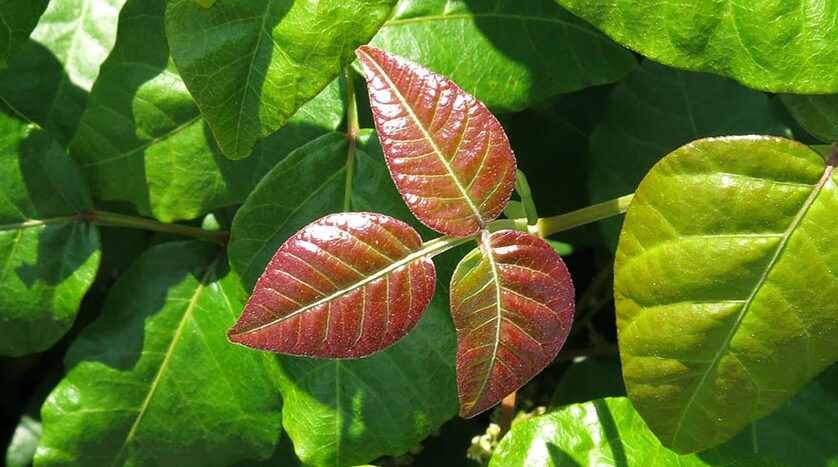
Poison ivy is a common plant in North America that can cause an itchy, irritating rash when it touches your skin. Learning how to recognize it is the best way to avoid it. The plant can grow as a small shrub, a ground cover, or a climbing vine on trees and fences.
Below are the main characteristics that help identify poison ivy.
1. “Leaves of Three” Rule 🌿
The easiest way to recognize poison ivy is the famous saying:
“Leaves of three, let it be.”
Each poison ivy leaf is made of three smaller leaflets:
- One leaflet in the center with a longer stem
- Two leaflets on the sides with shorter stems
The edges of the leaves may be:
- Smooth
- Slightly toothed
- Lobed (irregular bumps)
Because the leaf shapes can vary, people sometimes mistake poison ivy for other plants.
2. Leaf Color Changes by Season 🍃🍂
Poison ivy changes appearance throughout the year.
Spring
- Reddish or bronze leaves
- Shiny surface
Summer
- Bright or dark green leaves
- Thick and sometimes glossy
Fall
- Leaves turn red, orange, or yellow
These seasonal color changes can make poison ivy harder to recognize.
3. Growth Forms 🌱
Poison ivy does not grow in just one way. It can appear as:
Ground plant
- Low-growing clusters along trails and fields
Shrub
- Small bushy plant about 1–4 feet tall
Climbing vine
- Thick, hairy vine climbing trees or walls
- The vine often looks fuzzy because of aerial roots
The hairy vine on tree bark is one of the strongest warning signs.
4. Berries and Flowers 🍇
Poison ivy also produces small fruits.
- Flowers: tiny, greenish, and hard to notice
- Berries: small, round, and white or pale yellow
Birds eat these berries, which helps spread the plant to new areas.
5. Where Poison Ivy Grows 🌎
Poison ivy commonly grows in:
- Forest edges
- Hiking trails
- Fields and gardens
- Along fences and roadsides
- Riverbanks and wooded areas
It thrives in both sunlight and shade, making it very widespread.
6. Why It Causes a Rash ⚠️
Poison ivy contains an oily chemical called urushiol. When it touches skin, it can cause:
- Redness
- Itching
- Blisters
- Swelling
Even dead plants or vines can still contain this oil.
Quick Identification Checklist
- Three leaflets per leaf
- Middle leaflet has a longer stem
- Leaves may be shiny or dull
- Can grow as a vine, shrub, or ground plant
- White or pale berries
Simple tip: If you see a plant with three leaves growing together, avoid touching it unless you are certain it is not poison ivy.